
Powering Colorado
Turning Hard Energy Questions into Clear Answers

The Challenge
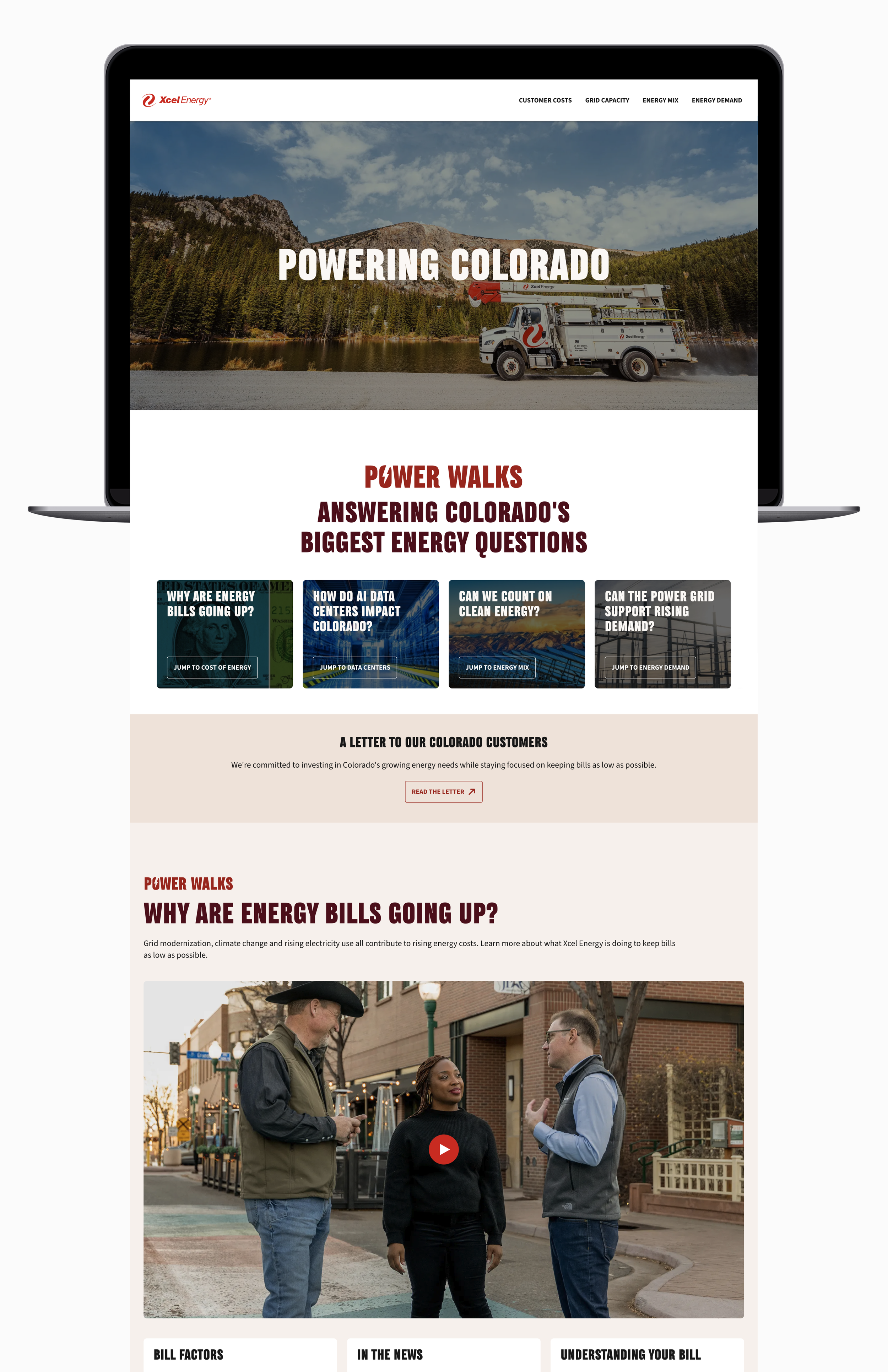
Colorado customers had pressing questions about their energy future. Bills were going up, AI data centers were moving into the state, and public conversations about clean energy and reliability were getting louder. Much of what customers heard came from news headlines and secondhand sources. Xcel Energy needed one trusted place to answer those questions directly.
Xcel Energy was also introducing a refreshed brand. No digital property had used the new fonts, colors and visual style yet, so this microsite had to inform customers and also prove the new brand could work on the web.
CLIENT
Xcel Energy
ROLE
Experience Designer
LAUNCHED
April 2026
TEAM
UX, marketing, product, content and engineering leadership, plus a design system designer and a developer
TOOLS
Figma
The Goals
I led the design of Powering Colorado, a public-facing microsite meant to turn complex and sometimes sensitive topics into a clear, trustworthy experience. My goals were to:
Answer Colorado residents' biggest energy questions in plain, approachable language
Build trust on emotionally charged topics like rising costs
Help visitors leave both informed and able to act
Bring the new Xcel Energy brand to life in a digital experience for the first time
Set a visual and structural foundation for future digital properties
The Approach
Structured the site around the questions customers were actually asking
I organized the experience around four core questions:
Why are energy bills going up?
How do AI data centers affect Colorado?
Can we count on clean energy?
How will the grid meet growing demand?
Each section starts with a plain-language answer, then backs it up with supporting details like the $1.7 billion grid investment and the goal of carbon-free electricity by 2030. Relevant news coverage gives visitors outside context.
Paired every answer with practical next steps
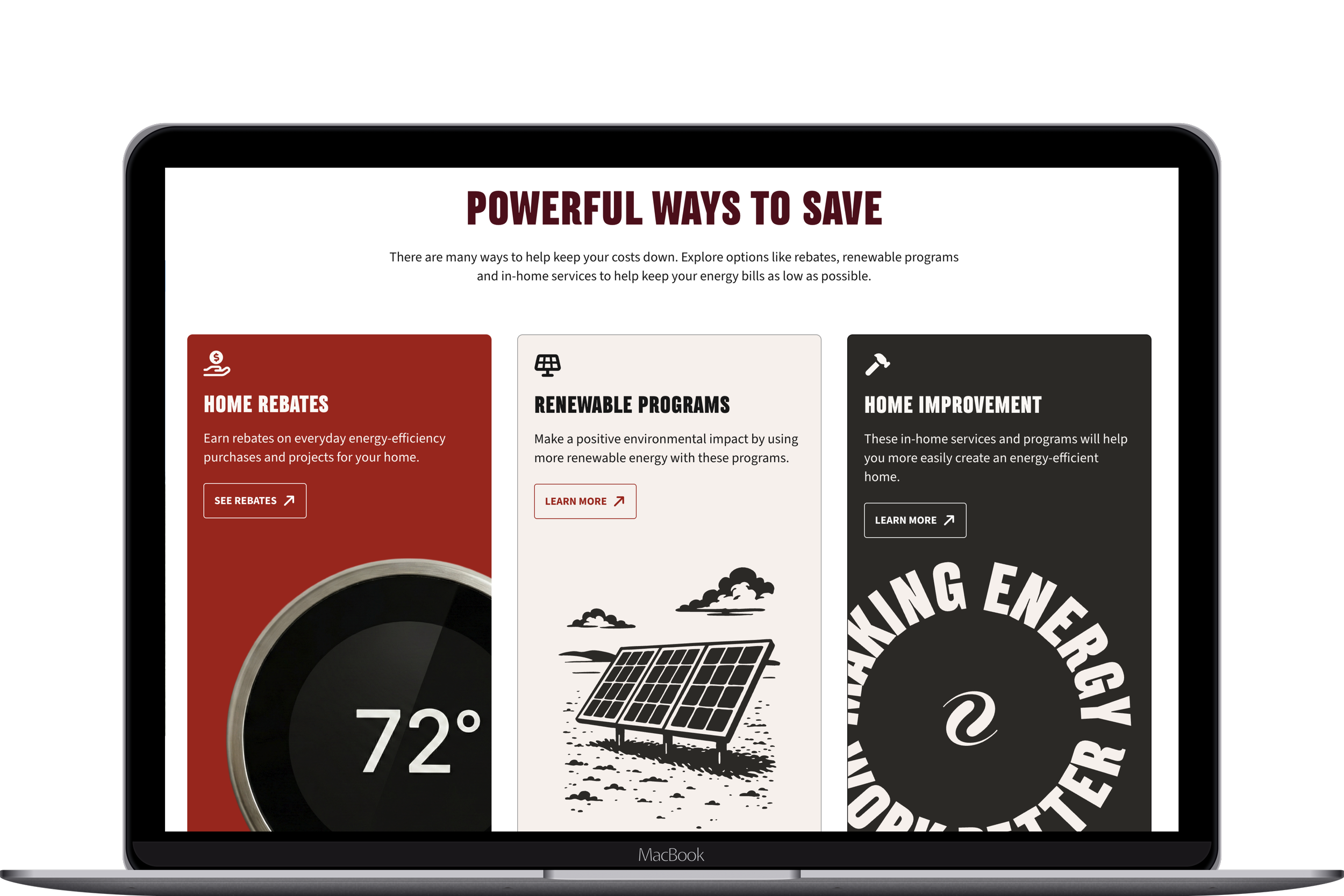
To make sure visitors could act on what they learned, each section links to resources that fit the question, such as bill breakdowns, energy assistance, rebates and renewable energy programs.
Defined the new brand and an introductory design system
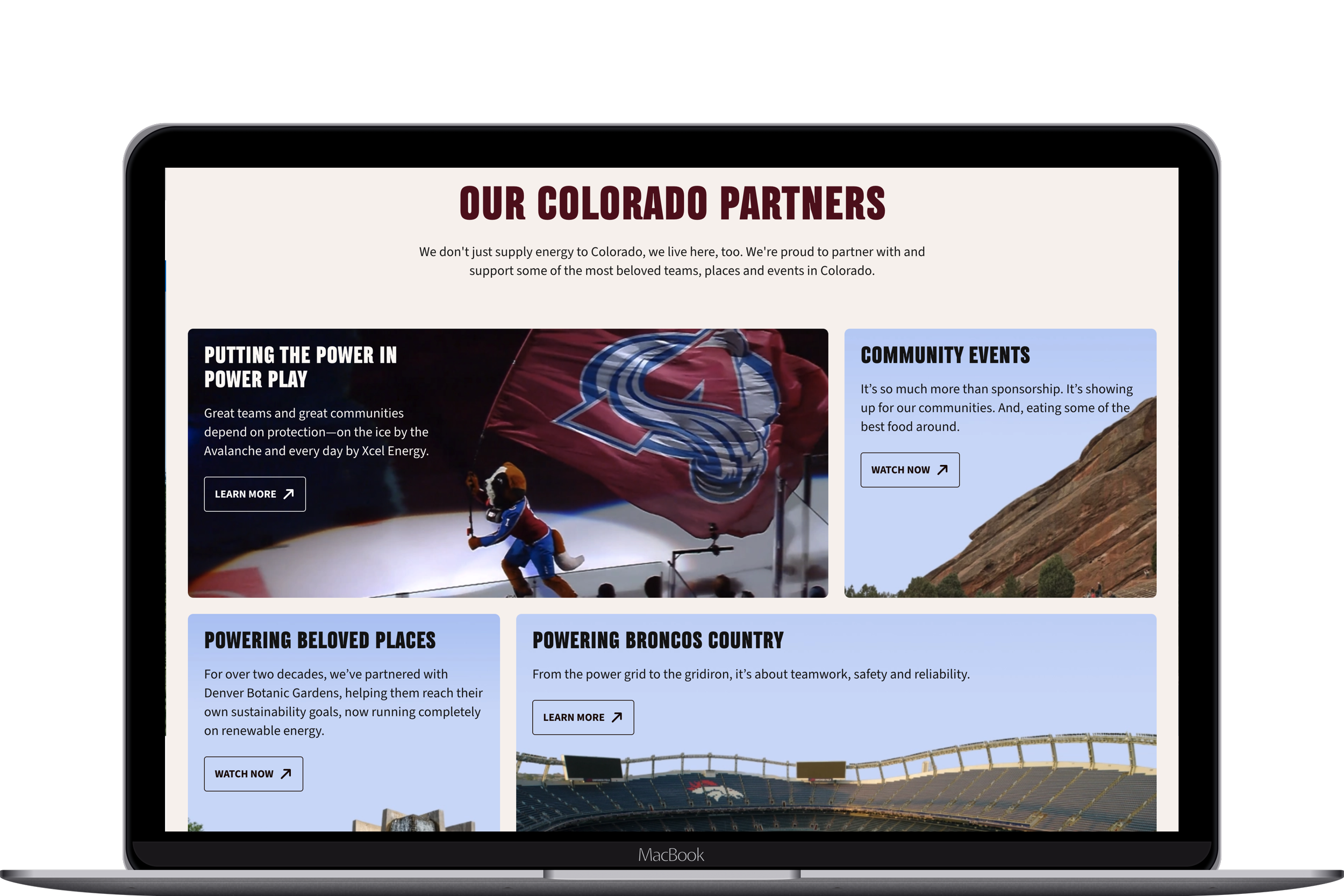
I applied the new brand typography, color palette and design aesthetic to a live product for the first time. Working with the design system designer, I turned brand guidelines into usable components, spacing and type hierarchy. Together we stood up a new introductory design system for Xcel Energy, with reusable standards for future digital work.
Aligned stakeholders over an extended timeline
Worked closely with marketing, UX, product, content and engineering leadership to align messaging, structure and visual design
Presented design decisions to stakeholders throughout the process to build alignment and keep momentum
Worked with the developer from early concepts through build so the designs stayed feasible and the final product matched the design
Refined layouts, content order and visual treatments over several rounds of feedback
Validated the design through UX research
We tested the experience with users to understand:
How favorably they responded to the experience and the brand
Whether they could understand the content and follow the key messages
Which messages and visuals resonated most, and where confusion or skepticism came up
The findings shaped later iterations, including how we framed sensitive topics like bill increases and how much detail to show at each level of the page.
The Impact
Launched a clear, question-led microsite that gives Colorado residents direct answers on cost, data centers, clean energy and reliability, along with clear paths to take action
Delivered the first digital expression of the new Xcel Energy brand, which became the foundation for future digital properties
Established an introductory design system with reusable standards for future Xcel Energy digital work
Grounded design decisions in user research, validating favorability and comprehension before launch
Strengthened cross-functional alignment across marketing, UX, product, content and engineering, creating a repeatable model for later brand rollouts